



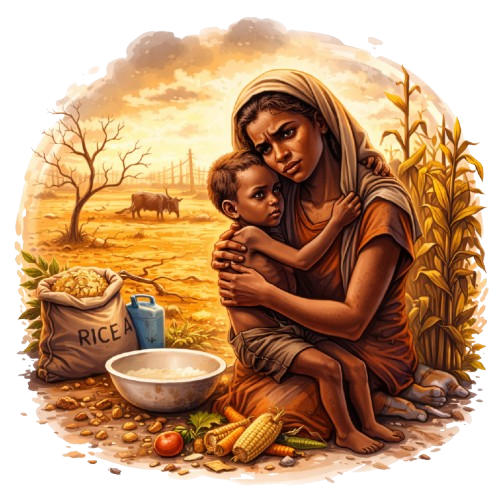
🍞 Hunger and Food Insecurity
Despite significant advancements in agriculture, technology, and global development, hunger and food insecurity remain among the most pressing challenges facing humanity. Today, approximately 735 million people around the world still face hunger, lacking consistent access to sufficient, safe, and nutritious food. This crisis is not only a humanitarian concern but also a barrier to sustainable development, economic progress, and global stability.
🌐 Understanding Food Insecurity
Food insecurity exists when individuals or communities do not have reliable access to enough affordable and nutritious food to maintain a healthy life. It manifests in different forms:
Chronic hunger: Persistent lack of food over time
Acute food insecurity: Severe hunger caused by sudden shocks such as conflict or disasters
Malnutrition: Imbalance in nutrient intake, including undernutrition and micronutrient deficiencies
Food insecurity is not just about the absence of food—it is about the lack of access, affordability, and quality.
🌍 Root Causes of Hunger
Conflict and Instability
Armed conflicts disrupt food production, supply chains, and markets. Farmers are often forced to abandon their land, while infrastructure such as roads and storage facilities is destroyed. Conflict zones frequently experience severe food shortages, making hunger both a consequence and a driver of instability.
Climate Change
Climate change is increasingly affecting agricultural productivity. Extreme weather events—such as droughts, floods, and storms—damage crops, reduce yields, and threaten food security. Regions dependent on rain-fed agriculture are particularly vulnerable.
Economic Inequality and Poverty
Poverty remains one of the most significant drivers of hunger. Even when food is available, many individuals cannot afford it. Rising food prices, unemployment, and economic instability further limit access to essential nutrition.
Unsustainable Agricultural Practices
Overuse of natural resources, soil degradation, and deforestation reduce long-term agricultural productivity. Without sustainable practices, food systems become less resilient and more vulnerable to shocks.
Supply Chain Disruptions
Global food systems are interconnected, and disruptions—such as pandemics, geopolitical tensions, or transportation challenges—can impact availability and prices. These disruptions disproportionately affect low-income populations.
🧒 Impact on Human Health and Development
Hunger has profound consequences on physical and mental well-being. Malnutrition weakens immune systems, increases vulnerability to disease, and reduces life expectancy.
👩 Women and Food Insecurity
Women, particularly in developing regions, face higher levels of food insecurity. Gender inequality limits access to resources such as land, education, and income, affecting their ability to secure food for themselves and their families.
👶 Children and Malnutrition
Children are among the most affected by food insecurity. Malnutrition during early childhood can lead to:
Stunted growth
Cognitive impairment
Increased risk of illness and mortality
These effects are often irreversible, limiting a child’s ability to learn, work, and contribute to society later in life.
📉 Economic and Social Consequences
Food insecurity exists when individuals or communities do not have reliable access to enough affordable and nutritious food to maintain a healthy life. It manifests in different forms:
Chronic hunger: Persistent lack of food over time
Acute food insecurity: Severe hunger caused by sudden shocks such as conflict or disasters
Malnutrition: Imbalance in nutrient intake, including undernutrition and micronutrient deficiencies
Food insecurity is not just about the absence of food—it is about the lack of access, affordability, and quality.
🌍 Global Food Systems Under Pressure
Modern food systems face increasing pressure due to population growth, urbanization, and environmental challenges. While global food production is sufficient to feed the world, distribution and access remain unequal.
Key challenges include:
Food waste and inefficiency
Unequal distribution of resources
Dependence on vulnerable supply chains
Transforming food systems to be more inclusive, sustainable, and resilient is essential for addressing hunger.
🌱 The Role of Sustainability
Sustainable agriculture is critical to ensuring long-term food security. This includes:
Climate-smart farming practices
Efficient water and resource management
Protection of biodiversity
By promoting sustainability, communities can increase productivity while preserving natural resources for future generations.
🤝 The Importance of Global Cooperation
Addressing hunger requires coordinated efforts at local, national, and global levels. Governments, NGOs, private sector actors, and communities must work together to:
Improve food distribution systems
Support smallholder farmers
Invest in agricultural innovation
Strengthen social safety nets
Global partnerships are essential to achieving food security for all.
🚨 Emergency vs Long-Term Solutions
While emergency food aid is critical during crises, it is not a sustainable solution. Long-term strategies must focus on:
Building resilient food systems
Empowering local communities
Addressing root causes of hunger
Balancing immediate relief with sustainable development is key to lasting impact.
🌟 GJU’s Perspective
At Global Justice for Unity (GJU), we view hunger not as an inevitable condition, but as a solvable challenge rooted in inequality and systemic failure. Food is a basic human right, and ensuring access to it is fundamental to justice and dignity.
Our approach focuses on:
Supporting community-based food systems
Promoting sustainable agriculture
Advocating for equitable resource distribution
Strengthening resilience in vulnerable regions
We believe that ending hunger requires not only resources but also commitment, innovation, and global unity.
🌍 Looking Forward
The path toward food security is challenging but achievable. With the right combination of policy, innovation, and collaboration, the world has the capacity to eliminate hunger.
A future free from hunger means:
Healthier populations
Stronger economies
More stable societies
At GJU, we are committed to working toward this vision—where no one goes to bed hungry, and every individual has the opportunity to live a healthy and fulfilling life.