


GJU’s Integrated Approach
A Comprehensive Strategy for Sustainable Impact
At Global Justice for Unity (GJU), we recognize that today’s global challenges—ranging from humanitarian crises and forced displacement to food insecurity, environmental degradation, and systemic inequality—are deeply interconnected. Addressing these issues requires more than isolated interventions; it demands a coordinated, multi-dimensional approach that bridges immediate relief with long-term development and systemic change.
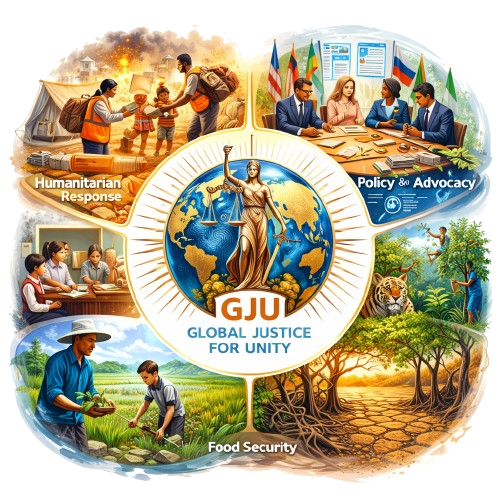
Our integrated approach is built on five strategic pillars: Humanitarian Response, Community Empowerment, Food Security, Ecosystem Restoration, and Policy & Advocacy. Together, these pillars form a holistic framework designed to address urgent needs, strengthen resilience, and create sustainable pathways for communities worldwide.
🚨 Humanitarian Response: Immediate Relief with Dignity
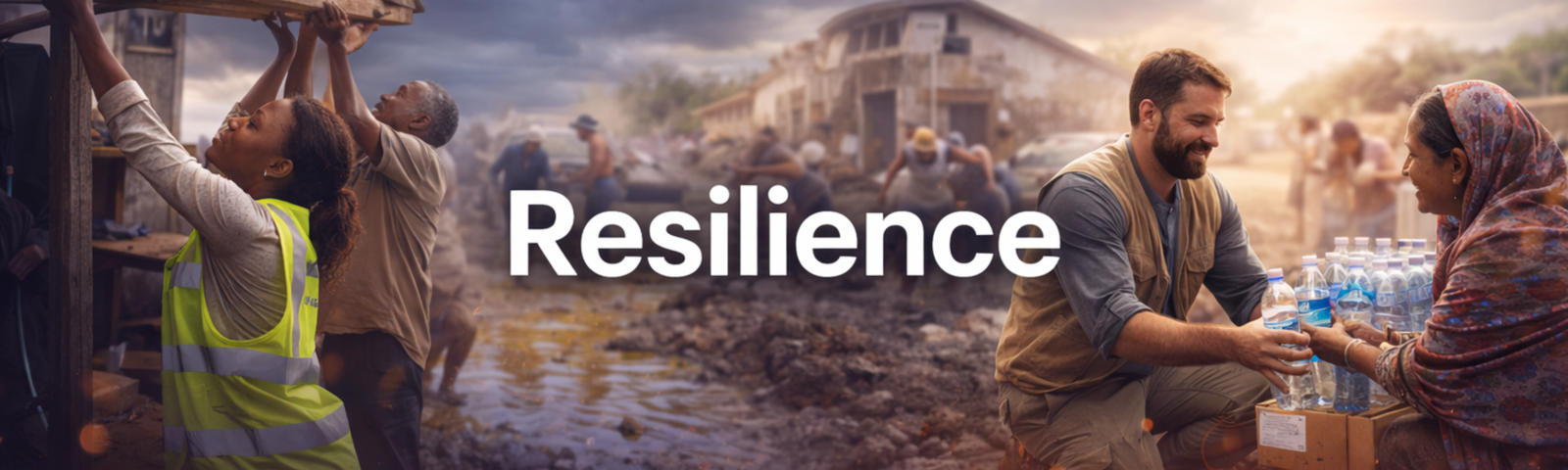
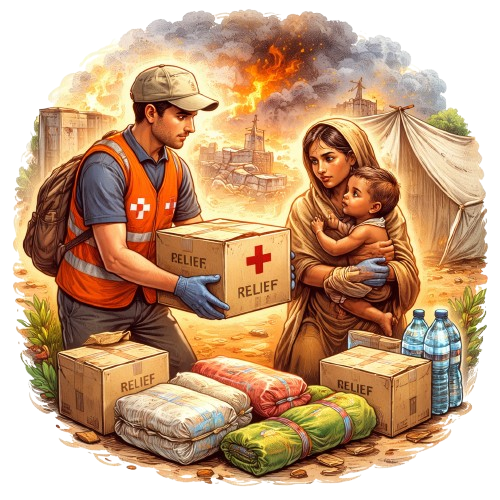
In times of crisis, rapid and effective humanitarian action is essential to saving lives and reducing suffering. GJU is committed to delivering timely, coordinated, and needs-based emergency assistance to populations affected by natural disasters, conflicts, and climate-related emergencies.
Our humanitarian response focuses on providing:
Emergency food and nutrition support
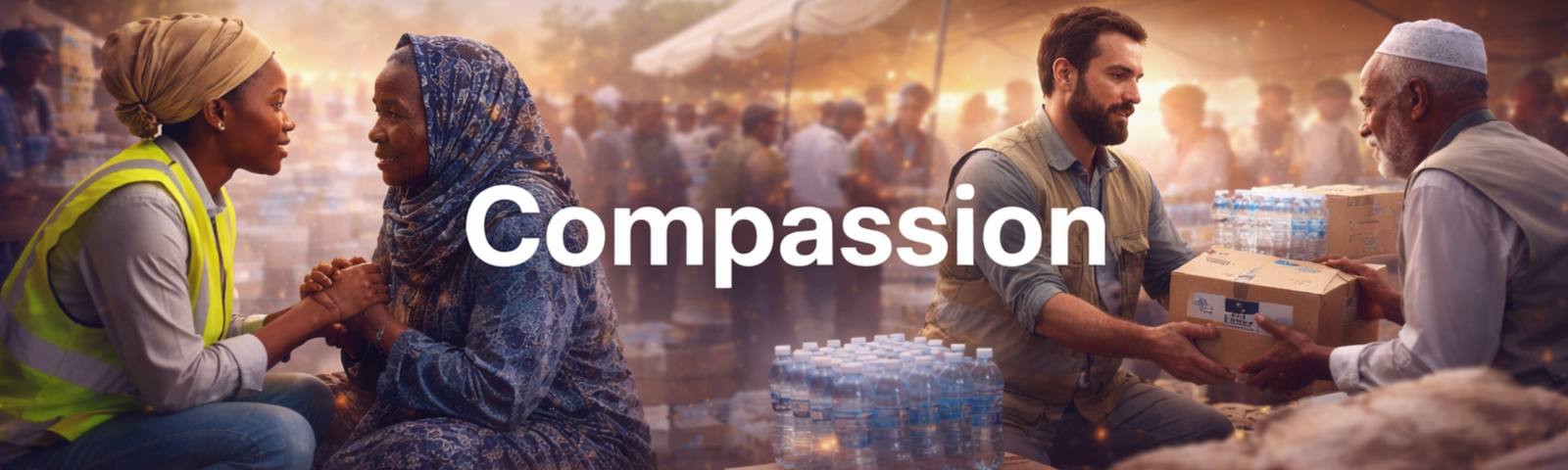
Access to safe drinking water and sanitation facilities
Temporary shelter and essential household supplies
Emergency healthcare and psychosocial support
We prioritize the most vulnerable populations, including women, children, the elderly, and persons with disabilities. By adopting a human-centered approach, we ensure that our interventions uphold dignity, respect cultural contexts, and promote protection.
GJU works closely with local partners, community organizations, and international networks to ensure rapid deployment and efficient resource utilization. Our emergency response systems are designed to be flexible and adaptive, allowing us to respond effectively in diverse and dynamic environments.
Importantly, our humanitarian efforts go beyond immediate relief. We integrate early recovery strategies into our response, ensuring that affected communities can transition from crisis to stability. This includes restoring basic services, supporting livelihoods, and rebuilding essential infrastructure.
🏠 Community Empowerment: Building Resilient Futures
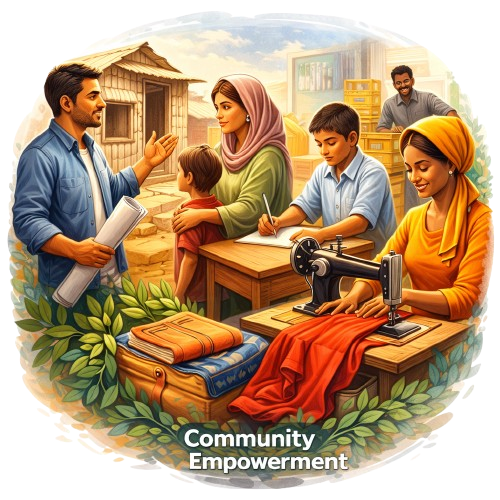
While humanitarian aid addresses immediate needs, long-term change depends on empowering communities to rebuild and sustain themselves. GJU places strong emphasis on community empowerment as a cornerstone of sustainable development.
Our programs focus on supporting displaced and vulnerable populations through:
Safe and durable housing solutions
Access to quality education for children and youth
Vocational training and livelihood development
Women’s empowerment and leadership initiatives
We believe that communities are not passive recipients of aid—they are active agents of change. By involving local stakeholders in planning and implementation, we ensure that our initiatives are relevant, inclusive, and sustainable.
Education is a key component of empowerment. GJU works to ensure that children affected by displacement or poverty have access to safe learning environments. We also support youth with skills training and employment opportunities, enabling them to contribute to their communities and break cycles of poverty.
Livelihood programs are designed to promote economic independence. Through micro-enterprise support, skill development, and access to financial resources, we help individuals and families build stable incomes and improve their quality of life.
Our approach also emphasizes social cohesion and inclusion, fostering unity within communities and reducing tensions between displaced populations and host communities.
🌾Food Security: Sustainable Solutions to End Hunger
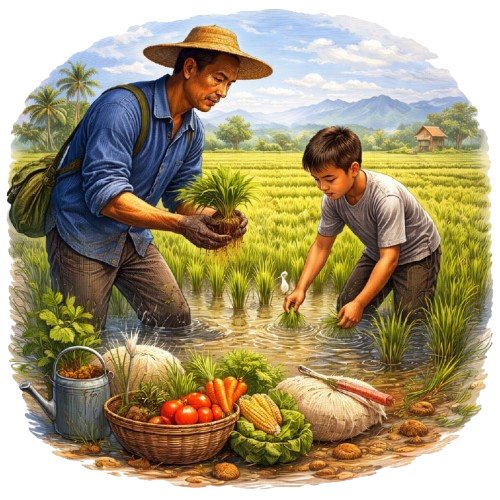
Food insecurity remains one of the most urgent global challenges, affecting hundreds of millions of people worldwide. GJU addresses this issue through sustainable, climate-smart approaches that strengthen local food systems and promote resilience.
Our food security initiatives include:
Training farmers in climate-resilient agricultural practices
Supporting access to seeds, tools, and irrigation systems
Promoting diversified and nutritious crop production
Strengthening local markets and supply chains
We work closely with smallholder farmers, who play a critical role in food production but often lack access to resources and support. By enhancing their capacity and productivity, we contribute to both food security and economic development.
Climate-smart agriculture is central to our approach. We promote practices such as:
Water-efficient irrigation
Soil conservation and regeneration
Agroforestry and crop diversification
These methods not only increase yields but also reduce environmental impact and improve resilience to climate shocks.
In addition to production, we focus on improving access to food. This includes strengthening distribution systems, reducing food waste, and supporting community-based food programs.
Our goal is to create food systems that are inclusive, sustainable, and resilient, ensuring that all individuals have access to sufficient and nutritious food.
🌱 Ecosystem Restoration: Protecting Nature for Future Generations
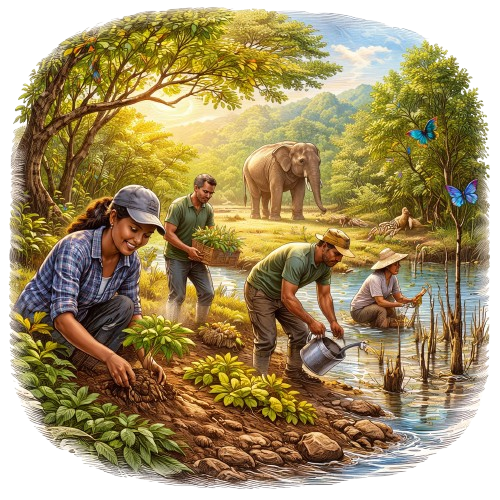
Environmental sustainability is essential for long-term development. GJU is committed to restoring and protecting ecosystems through initiatives that address climate change, biodiversity loss, and land degradation.
Our ecosystem restoration efforts include:
Large-scale reforestation and afforestation programs
Mangrove restoration to protect coastal communities
Soil and land regeneration initiatives
Conservation of biodiversity and natural habitats
Healthy ecosystems provide critical services such as clean air, water, and fertile soil. They also play a key role in climate regulation and disaster risk reduction.
Mangrove restoration, for example, not only supports biodiversity but also acts as a natural barrier against storms and coastal erosion. Similarly, reforestation helps absorb carbon dioxide, mitigating climate change.
We actively involve local communities in restoration efforts, providing training and creating livelihood opportunities linked to environmental conservation. This ensures that restoration initiatives are both sustainable and economically beneficial.
Our approach recognizes that environmental protection and human development are interconnected. By restoring ecosystems, we support livelihoods, enhance resilience, and contribute to global sustainability goals.
🏛️ Policy & Advocacy: Driving Systemic Change
While on-the-ground interventions are essential, lasting impact requires changes at the policy level. GJU engages in policy advocacy and global dialogue to influence systems and create enabling environments for sustainable development.
We collaborate with:
Governments and policymakers
International organizations and institutions
Civil society and advocacy networks
Our advocacy efforts focus on:
Strengthening human rights frameworks
Promoting equitable access to resources and opportunities
Advancing climate and environmental policies
Ensuring transparency and accountability in governance
By participating in policy discussions and contributing evidence-based insights, we work to shape laws and policies that reflect the needs of vulnerable communities.
We also prioritize community voices in advocacy, ensuring that those most affected by global challenges are represented in decision-making processes.
Our goal is to bridge the gap between local realities and global policies, creating systems that are inclusive, just, and sustainable.

GJU’s integrated approach reflects our belief that true progress requires unity, innovation, and long-term commitment. By addressing immediate needs while building sustainable systems, we create a comprehensive framework for impact.
Each pillar of our approach is interconnected:
Humanitarian response saves lives
Community empowerment builds resilience
Food security ensures survival and growth
Ecosystem restoration protects the planet
Policy advocacy drives systemic change
Together, these elements enable us to tackle global challenges at their roots and create lasting solutions.
Achieving this vision requires strong partnerships and sustained investment. We invite donors, partners, and stakeholders to join us in advancing this integrated approach.
Your support will enable us to:
Expand our reach to vulnerable communities
Scale sustainable development programs
Strengthen resilience and preparedness
Advocate for systemic change at global levels
Together, we can build a world where justice, unity, and sustainability are not aspirations—but realities for all.